The Death of SaaS: Why Renting Your Tech Stack No Longer Makes Sense

For the last decade, the technology industry has had a single mantra: "Buy, Don't Build."
The logic was sound. Why would a business try to build its own software when it could rent a perfectly good tool for a monthly fee? Building was risky, expensive, and slow. Renting was agile. So, we all happily moved into the "hotel" of Software as a Service (SaaS).
But in 2026, the hotel bill has become astronomical.
At HeitechSoft, we have observed a critical shift. The "SaaS Bridge"—the era where renting was the only viable option—is collapsing. The economics of software development have fundamentally changed, and for forward-thinking businesses, renting your core tech stack no longer makes sense.
Here is why we believe the era of the "One-Person Village" is replacing the SaaS subscription model.
1. The $75,000 Subscription Headache
Open your company's P&L statement. Scan down the list of monthly software charges.
Salesforce. HubSpot. Slack. Jira. Asana. That HR tool you bought last year and haven't looked at since.
It looks like a modern tech stack, but operationally, it feels like death by a thousand cuts.
The problem isn't just the cost (though $75,000/year for a CRM is common); it is the operational friction. When you subscribe to five different platforms, you often only use 20% of the features in each, yet you pay for 100%.
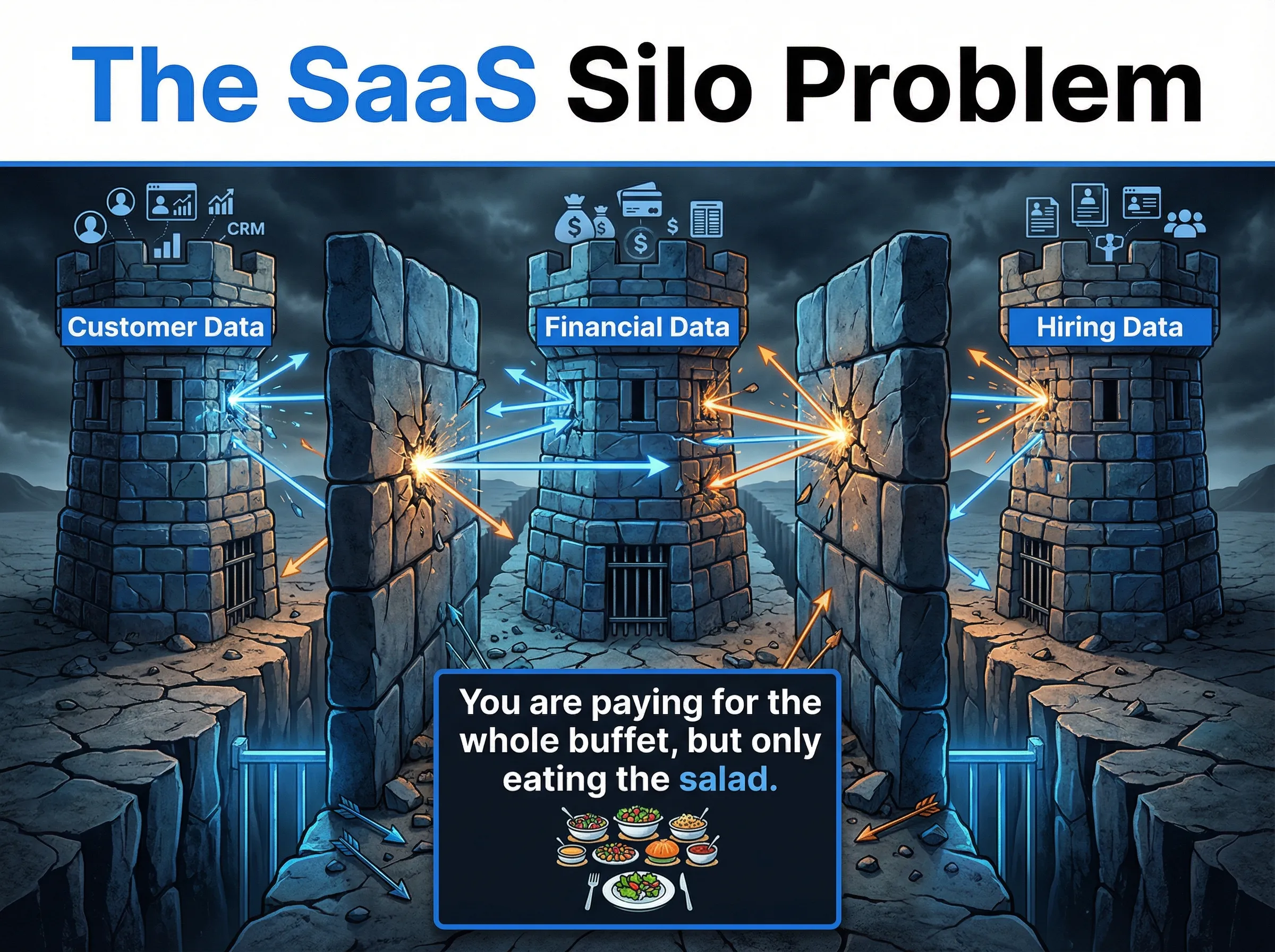
Even worse, these tools rarely talk to each other. Your customer data is trapped in one silo, your financial data in another, and your hiring data in a third. This forces your business to align its processes with the tool, rather than the other way around. Innovation stagnates because "the tool doesn't support that feature."
2. Enter Context Engineering: The New Economic Reality
Five years ago, building custom software required a "village." You needed a Frontend Developer, a Backend Developer, a Database Administrator, a UI/UX Designer, and a Project Manager. That was a minimum of five salaries and a massive coordination tax.
Today, that village has been replaced by the Context Engineer.
With the maturity of SOTA (State of the Art) Large Language Models like Opus 4.5 and GPT 5.2, the bottleneck in development is no longer writing syntax—it is managing context.
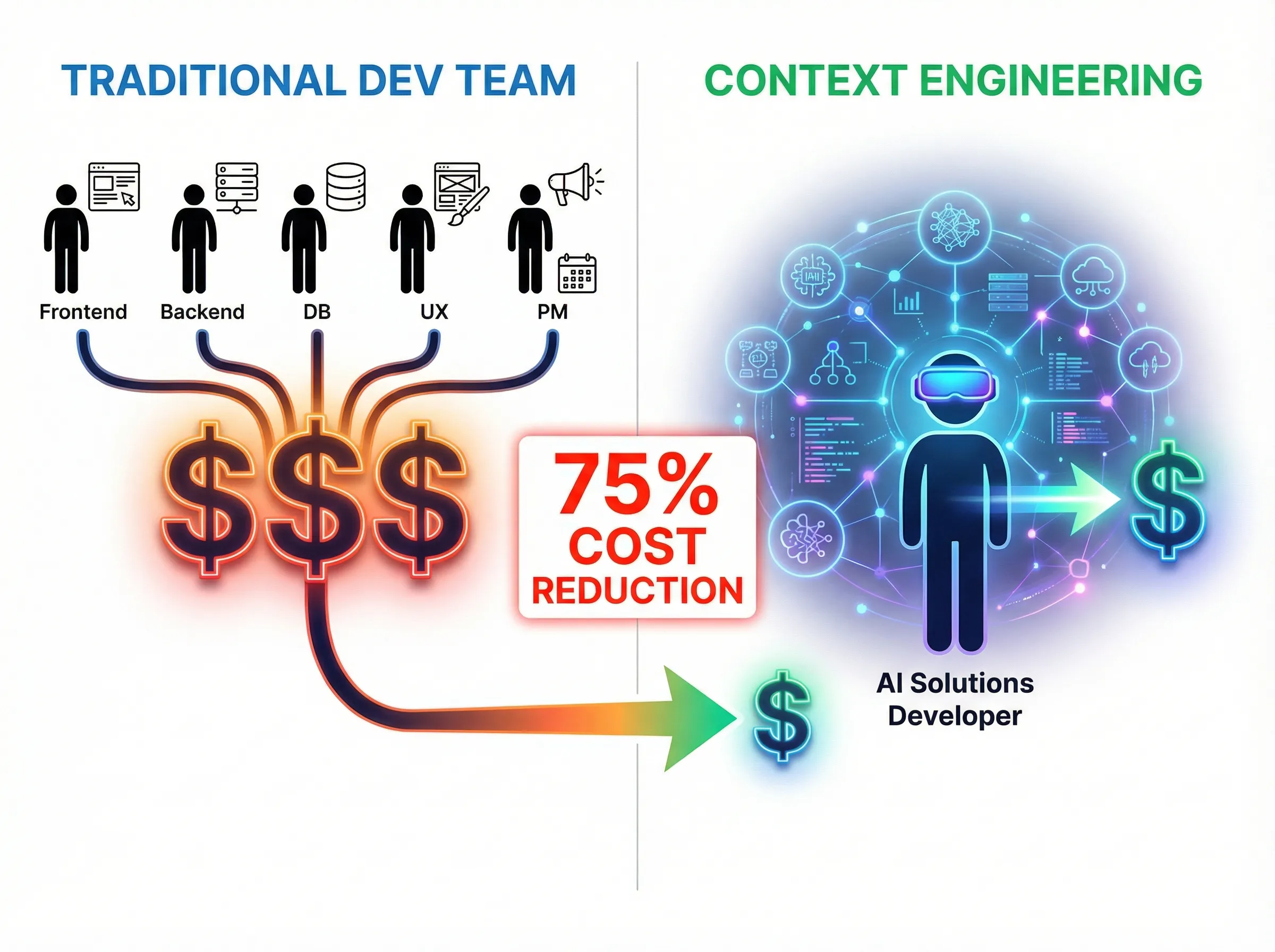
At HeitechSoft, we transitioned our development teams from the traditional model to a Context Engineering framework. The results flipped the "Build vs. Buy" equation on its head:
- 75% Cost Reduction: We can now build enterprise-grade assets for a fraction of the cost.
- 130% Speed Increase: Development velocity has more than doubled.
- Zero Bloat: We build exactly what is needed, nothing more.
3. Case Study: The "Polite" HR Portal
We didn't just theorize about this shift; we built it. Instead of renewing a costly subscription for a commercial Applicant Tracking System (ATS), we built the HeitechSoft HR Management Portal.
In the old world, building a secure, video-enabled ATS from scratch would have been madness. Using Context Engineering, we went from Discovery to Production for less than the cost of 6 months of a SaaS subscription.
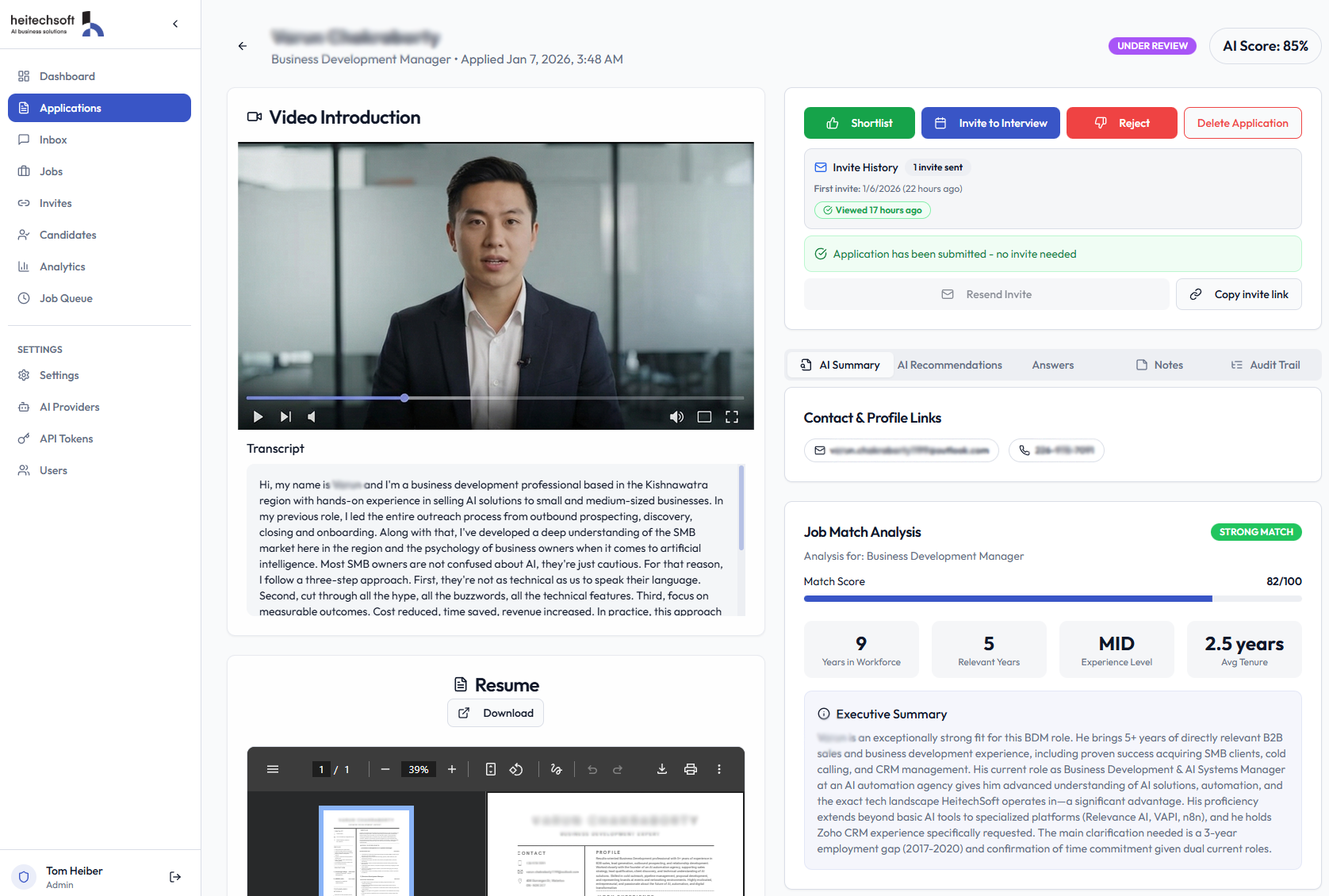
Because we owned the code, we could innovate where SaaS tools couldn't:
- "Fail Fast, Fail Politely": We automated a respectful rejection workflow that protects our employer brand—something generic tools often ignore.
- Context-Aware Screening: Instead of keyword matching, our AI reads resumes like a human, understanding context and nuance.
- Video-First Workflow: We built a custom video studio directly into the application flow.
We own the IP. We own the source code. The cost of running it does not increase if we hire 10 people or 1,000. We have exited the rent-seeking economy.
4. The Support Paradox
There is a misconception that SaaS is "safer" because it comes with support. But in reality, support often means a community forum or a tiered ticketing system.
Custom software brings the human back into the loop.
When you own your product and work with a partner like HeitechSoft, you have accountability.
- Need a new feature? We discuss it on Monday, and it’s often live by Friday.
- Something isn't working? You don't file a ticket; you speak to the architect who built it.
This is the ultimate paradox: By using advanced AI to build software, we have created a more personal, human-centric experience.
5. Your Next Move: Return on Independence
The era of the "one-size-fits-none" subscription is ending. We are returning to the era of the artisan—where tools are crafted to fit the hand of the master.
Our Challenge to You:
Audit your top three SaaS expenses this quarter. Look at that significant line item and ask: "If we owned this tool, what would we change?"
If the answer is a long list of missed opportunities, it’s time to stop renting. It’s time to build.
Ready to own your tech stack?
HeitechSoft helps forward-thinking businesses transition from legacy SaaS dependencies to proprietary, AI-driven assets. [Contact us today] to discuss how Context Engineering can transform your P&L.