Technologies Used
Introduction

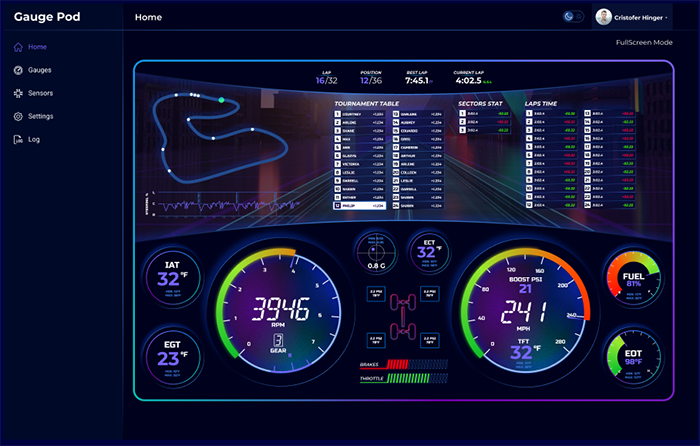
The world of motorsports is driven by performance, speed, and innovation. As technology continues to evolve, racing teams and enthusiasts seek new ways to gain insights into vehicle performance and enhance the overall racing experience. RevDash, an ambitious project developed by Heitech Software Solutions, aimed to revolutionize this space by creating an automotive interface that collects and displays real-time vehicle telemetry data on a web portal for users to access anywhere.
This case study explores the technical challenges, methodologies, and strategic choices behind the development of RevDash, focusing on the hardware prototype Soteria, software stack, and architectural decisions that contributed to the project's success. From leveraging a hybrid development methodology to employing cutting-edge technologies and rigorous testing, Heitech Software Solutions delivered a high-performance, reliable, and scalable solution that surpassed initial project objectives.
By examining the planning, execution, and outcomes of the RevDash project, this case study serves as an informative exploration of how innovative engineering and software development can come together to create a groundbreaking automotive interface that has the potential to transform the world of motorsports.
Section 1: Project Overview and Objectives
RevDash is a project aimed at developing an automotive interface for racing that collects vehicle telemetry data and displays it on a website in real-time. The primary objective was to create a hardware device that interfaces with a race vehicle's OBD/CAN Bus interface and various analog sensors to collect telemetry data, such as oil pressure, oil temperature, fuel pressure, vehicle speed, engine rpm, and more. Additionally, the device needed to collect local environmental data, including ambient temperature, GPS-based high-accuracy position data, and accelerometer readings to capture g-forces.
The data collected would then be streamed in real-time over a 5G network connection to a web portal where users, including social media followers of the driver, can view the telemetry data in real time. The project aimed to achieve an end-to-end latency of under 500 milliseconds for the data stream.
A significant challenge faced by the project was maintaining a consistent data stream, even when the connectivity was unreliable due to the nature of cellular communication in rural areas. Heitech Software Solutions, the company responsible for developing this product, built a hardware prototype and software stack to overcome these challenges and successfully meet the project's objectives.
Section 2: Hardware Development, Prototyping, and Technical Choices
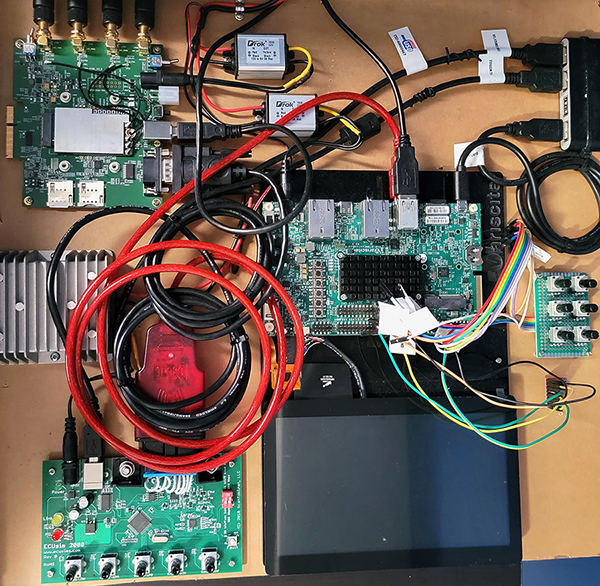
To address the project's requirements, Heitech Software Solutions developed a hardware prototype named Soteria. The device was built around a programmable MX8X Cortex-A35 microcontroller single-board computer (SBC) due to its low power consumption, high processing capabilities, and compatibility with various peripherals. The SBC's built-in OBD interface used ELM327 to capture vehicle telemetry, ensuring seamless communication with the vehicle's electronic control unit (ECU).
The Soteria prototype incorporated a Quectel 5G module for network connection and data streaming to the custom-built real-time IoT platform, code-named Iris. The module was chosen for its high data throughput, low latency capabilities, and compatibility with existing 4G LTE networks.
The device ran a lightweight version of Linux, with Python used to develop the capture code. After successfully testing a desktop solution with an OBD simulator, the prototype was field-tested on a Toyota 86 race vehicle at Toronto Motorsports Park. The Soteria prototype demonstrated its effectiveness, achieving less than 100-millisecond latency end-to-end while maintaining over 98% stream integrity. This performance surpassed the project's initial objectives and validated the technical choices made during development.
Section 3: Software Stack, Architecture, and Technical Choices
Heitech Software Solutions employed a combination of technologies and architectural patterns to create a performant, scalable, and reliable software stack for the RevDash project. Each component was chosen based on its ability to contribute to the overall performance, scalability, and reliability of the solution.
- .NET framework and Microsoft Blazor were chosen for their flexibility, ease of development, and support for creating interactive, real-time web applications.
- Docker and Ubuntu Linux were used to containerize and deploy the application components, enabling consistent and reproducible deployments.
- RabbitMQ was selected as the messaging broker to handle real-time data streams with high throughput and fault tolerance.
- MySQL and MongoDB were used to store configuration and telemetry data, respectively. MySQL handled structured configuration data, while MongoDB's schema-less design was ideal for large amounts of time-series telemetry data.
- Redis was employed as a high-speed caching layer to boost performance and reduce the load on the database systems.
Section 4: Hybrid Development Methodology and Testing
To ensure success, Heitech Software Solutions employed a hybrid development methodology, combining the best practices from both agile and traditional project management. This strategy allowed the team to balance the flexibility of agile development with the structure of traditional methods.
The process began with detailed planning, requirements analysis, and risk assessment to establish a solid foundation. Once planning was complete, the team transitioned to an agile approach, working in iterative sprints to build, test, and refine both hardware and software components. This enabled the team to quickly identify and address issues as they arose.
Rigorous testing—including unit, integration, and system testing—was crucial. In addition to controlled testing, the team conducted field tests on a Toyota 86 race vehicle at Toronto Motorsports Park. This real-world testing allowed the team to evaluate the end-to-end performance of the solution under realistic racing conditions.
Section 5: Scalability, High Availability, and Extensibility
In designing the RevDash solution, Heitech Software Solutions prioritized scalability, high availability, and extensibility to ensure the system could accommodate varying loads, maintain uptime, and support future enhancements.
- Scalability: The system was architected to scale automatically based on load. By utilizing Docker and a cloud infrastructure, the team enabled the system to scale horizontally, adding or removing instances as needed to handle fluctuating demand.
- High Availability: To ensure continuous operation, the system was designed with redundancy and failover mechanisms. Critical components like databases and messaging brokers were set up in clusters to provide fault tolerance, while load balancing and health checks distributed traffic and routed around failures.
- Extensibility: The team implemented a robust API and microservice architecture. By breaking down the application into smaller, modular services, it became easier to add, modify, or replace components without affecting the overall system.
Through careful planning and strategic technology choices, Heitech Software Solutions created a solution that not only met the immediate needs of the RevDash project but also provided a solid foundation for future growth and innovation.
Section 6: Conclusion, Project Success and Lessons Learned
The RevDash project successfully met its objectives, creating an automotive interface with the potential to revolutionize motorsports. The Soteria hardware prototype achieved less than 100-millisecond latency with over 98% stream integrity, and the software stack provided a scalable, highly available, and extensible solution.
The project provided valuable insights and lessons for Heitech Software Solutions:
- The importance of a hybrid development methodology: Combining agile and traditional approaches was effective in balancing flexibility and structure.
- Strategic technology choices: Selecting the right components was crucial for achieving the desired performance, scalability, and reliability.
- Thorough testing and validation: Rigorous testing in both controlled and real-world scenarios was essential for ensuring robustness.
- Collaboration and communication: Open communication between all parties was vital to the project's success.
- Iterative improvement and learning: A continuous learning approach allowed the team to refine and optimize the solution, ultimately delivering a product that exceeded initial expectations.
As the RevDash project moves forward, its success serves as a testament to the power of collaboration, innovation, and the relentless pursuit of excellence in engineering and software development.